Introduction
On Page SEO focuses on making a webpage clear, useful, and easy to understand—for both users and search engines. It’s not about tricks or keyword stuffing; it’s about structure, relevance, and clarity.
While tools and algorithms continue to evolve, a few on-page fundamentals consistently separate pages that earn visibility from those that don’t. When these basics are done right, search engines understand your content better—and users trust it more.
Why this matters now
Many On Page SEO guides are outdated or overloaded with technical tweaks that no longer move the needle. In practice, modern on-page SEO rewards pages that communicate one clear idea, satisfy search intent, and guide readers naturally through the content.
The core purpose of On Page SEO (simplified)
On Page SEO helps search engines answer one question quickly:
“What is this page about, and who is it for?”
If your page answers that clearly, optimization becomes straightforward.
Page titles that match intent
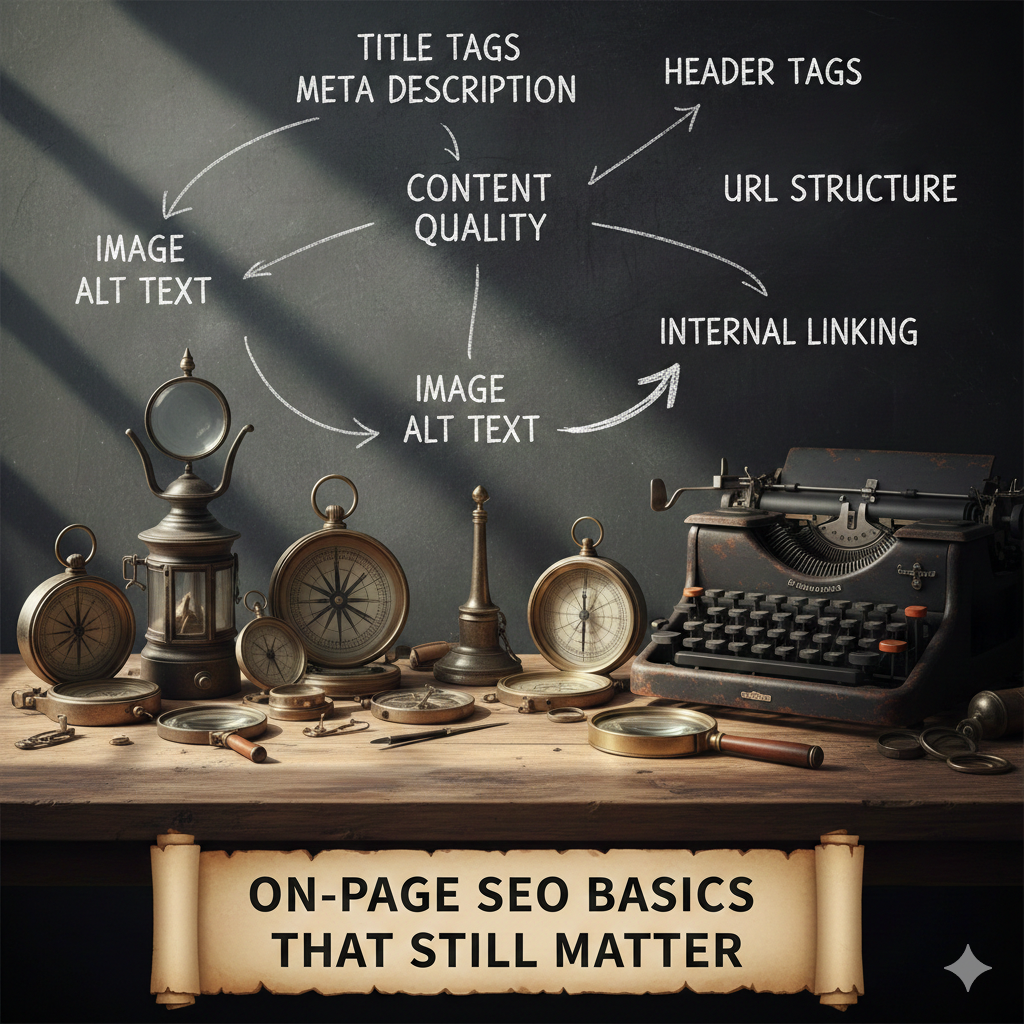
Your title isn’t for keywords—it’s for expectations.
What works
- Matches the user’s question
- Signals the benefit clearly
- Uses natural language
Common mistake
Stuffing variations of the same keyword.
Fix: Write titles for humans first.
[Pro-Tip] From real usage, titles that promise clarity outperform titles that promise tricks.
Headings that guide reading (H1, H2, H3)
Headings act like signposts.
- H1 = main idea
- H2 = major subtopics
- H3 = supporting explanations
If someone skims only headings, they should still understand the page.
Content that stays focused
One page = one main topic.
What beginners often do wrong
Trying to rank for multiple topics on a single page.
Fix: Split topics into separate, internally linked pages.
[Expert Warning] A page trying to rank for everything usually ranks for nothing.
Internal links that add context
Internal linking isn’t about SEO tricks—it’s about guidance.
Good internal links
- Explain relationships between topics
- Help users go deeper
- Reinforce topical authority
Bad internal links
- Random
- Repetitive anchors
- Forced placements

A practical table: On Page SEO elements that matter
| Element | Why It Still Matters | Beginner Tip |
| Title tag | Sets expectations | Write for clarity |
| Headings | Improve structure | Explain, don’t decorate |
| Content focus | Boost relevance | One topic per page |
| Internal links | Build context | Link meaningfully |
| Images + alt text | Aid understanding | Describe naturally |
Images and alt text (often overlooked)
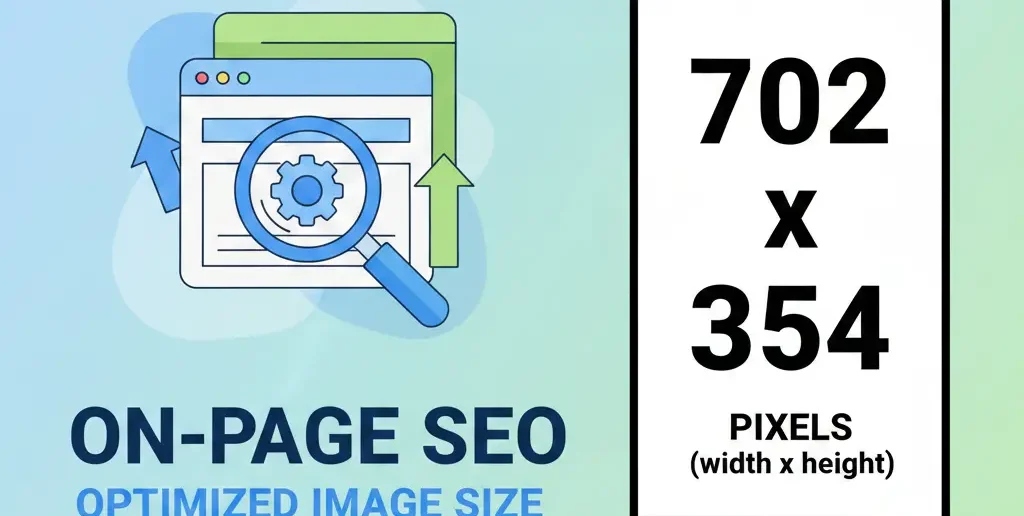
Images support understanding—not decoration.
Alt text should
- Describe the image
- Add context
- Avoid keyword stuffing
[Money-Saving Recommendation] Use simple, original visuals instead of stock overload—clarity beats polish.
Information Gain: why “perfect optimization” fails
Most top-ranking pages aren’t perfectly optimized—they’re perfectly aligned. Alignment with intent, clarity of explanation, and ease of reading matter more than hitting every checklist item.
Unique section: Beginner mistake most people make
Beginners often optimize after writing. In practice, planning structure before writing produces cleaner pages and better rankings.
Simple On Page SEO checklist (use this weekly)
- One clear topic
- Title matches intent
- Headings explain flow
- Examples clarify ideas
- Internal links make sense
Learn visually (recommended watch)
- YouTube: https://www.youtube.com/watch?v=0V1YzZ9Ew6Y
Explains modern On Page SEO with practical examples.
FAQs
Is On Page SEO still important?
Yes. It’s the foundation of search visibility.
Do keywords still matter on pages?
Yes, but naturally and contextually.
How many internal links should a page have?
Enough to guide readers—no fixed number.
Do images affect SEO?
Indirectly, by improving clarity and engagement.
Should I update old pages?
Yes. Refreshing clarity often improves rankings.
Internal linking plan
- How Search Engines Work: From Query to Results
- SEO for Beginners: Step-by-Step Without the Confusion
External Links
Conclusion
On Page SEO hasn’t disappeared—it’s matured. Focus on clarity, intent, and structure. When users understand your page easily, search engines usually do too…