Introduction
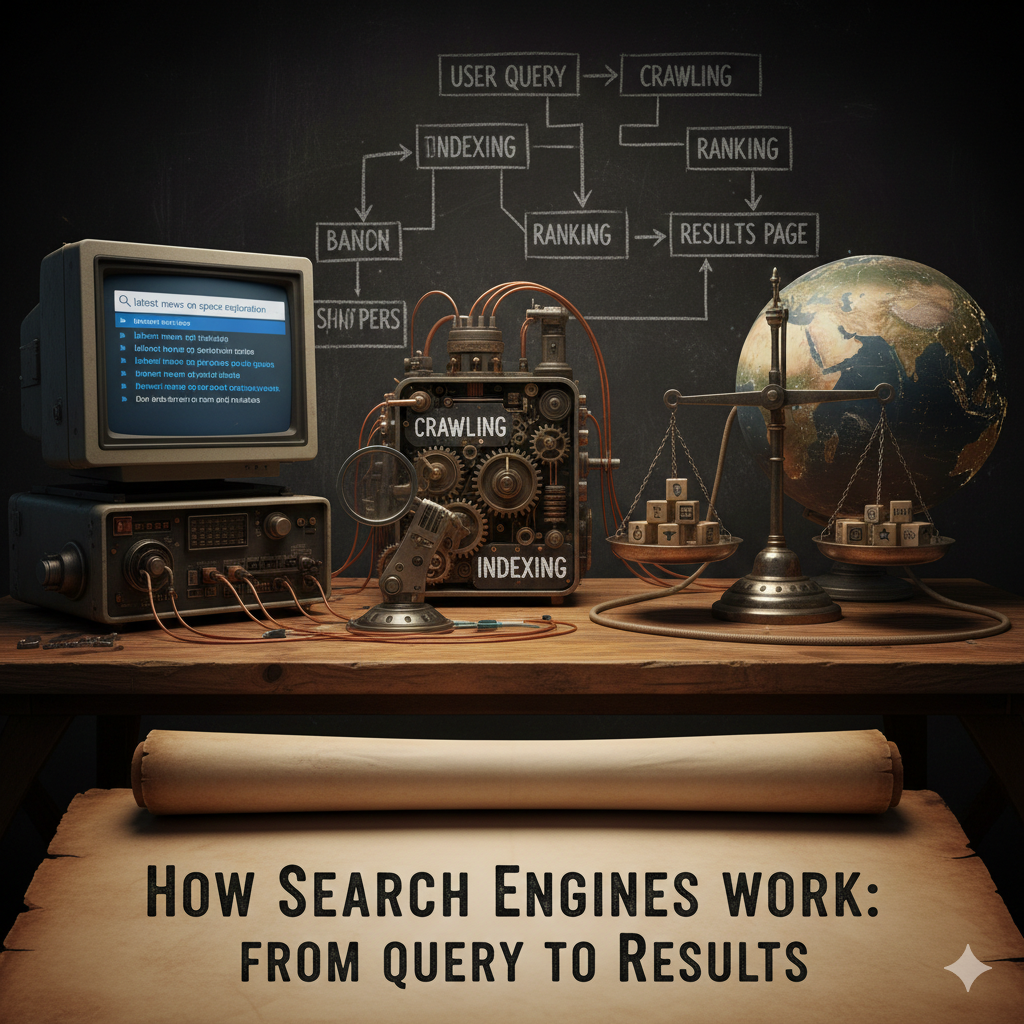
search engines work to deliver relevant results depends on a clear process that includes discovering pages, analyzing content, and ranking the most useful information. From discovering pages to analyzing content to ranking the most useful results, each step depends on clarity, structure, and usefulness. By understanding what happens between a query and the results page, you can make SEO decisions that actually work instead of guessing. Focus on creating content that’s easy to find, easy to understand, and genuinely helpful, and search engines will reward it naturally.
Why this matters now how search engines work from query to results
Understanding how search engines work helps you stop guessing. When you know what happens between a search query and the results page, SEO decisions become logical instead of experimental. Search Engines Work
The three core stages of search engines (big picture)
Search engines follow a predictable process:
- Crawling – discovering content
- Indexing – understanding and storing content
- Ranking – ordering results by usefulness
Each stage depends on clarity, structure, and user behavior—not tricks. Search Engines Work
Stage 1: Crawling – how pages are discovered
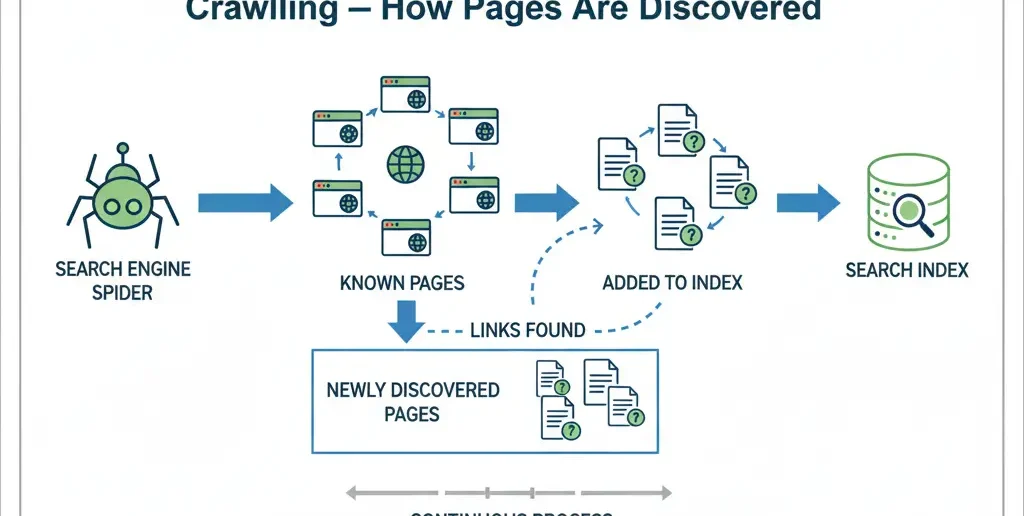 What helps crawling. Search Engines Work
- Internal links between related pages
- Clean URLs
- Logical site structure
Common mistake
Blocking important pages unintentionally.
Fix: Ensure key pages are accessible and internally linked.
[Pro-Tip] From real usage, pages with clear internal links get discovered faster than isolated pages.
Stage 2: Indexing – how content is understood
Indexing is when search engines analyze what a page is about. Search Engines Work
They look at:
- Main topic and headings
- Content clarity and depth
- Images and context
- Page structure
Important clarification:
Being indexed does not mean ranking.
[Expert Warning] Many pages are indexed but never rank because they don’t clearly satisfy search intent.
Stage 3: Ranking – how results are ordered
Ranking determines where a page appears.
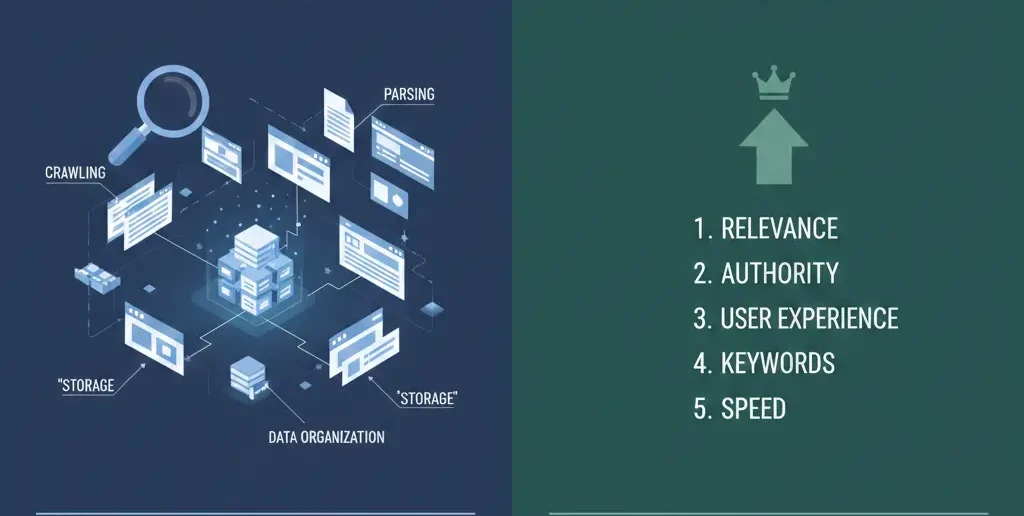
Search engines compare:
- Relevance to the query
- Engagement signals (time, interaction)
- Content usefulness
- Trust and consistency over time
Pages that solve the problem better move up.Search Engines Work
A simple table: ranking factors in plain English
| Factor | What It Really Means |
| Relevance | Does this page answer the query? |
| Engagement | Do users stay and read? |
| Clarity | Is the topic easy to understand? |
| Authority | Is this source consistently useful? |
| Freshness | Is the content still accurate? |
Information Gain: indexing vs ranking (the gap most guides miss)
Most explanations blur indexing and ranking. The key insight: indexing is permission; ranking is competition. To rank, your page must add something others don’t—clearer explanation, better structure, or missing context. Search Engines Work
Unique section: Real-world scenario
A site published ten similar articles targeting variations of one keyword. Only one ranked. Why? That page had:
- Clearer headings
- Practical examples
- Internal links explaining context
Search engines favored clarity, not quantity. Search Engines Work
[Money-Saving Recommendation] Improve one strong page instead of publishing many weak ones.
How intent changes ranking outcomes
Two people search similar words but want different things. Search engines look at patterns:
- Click behavior
- Return-to-search actions
- Time spent reading
Pages that match intent win—even with fewer backlinks.
Learn visually (recommended watch)
- YouTube: https://www.youtube.com/watch?v=BNHR6IQJGZs
A visual explanation of how search engines crawl, index, and rank pages.
FAQs
Do search engines read every page?
No. They discover pages through links and sitemaps.
How long does indexing take?
Anywhere from hours to weeks, depending on signals.
Why is my page indexed but not ranking?
It likely lacks relevance or clarity compared to others.
Do backlinks still matter?
Yes, but usefulness matters first.
Can engagement affect rankings?
Indirectly—engagement signals help evaluate usefulness.
Is ranking permanent?
No. Rankings change as content and behavior change.
Internal linking plan
External link
Conclusion
Search Engines Work aren’t mysterious systems—they’re problem-solvers. When your content is easy to discover, easy to understand, and genuinely helpful, search engines reward it naturally. Focus on clarity at every stage