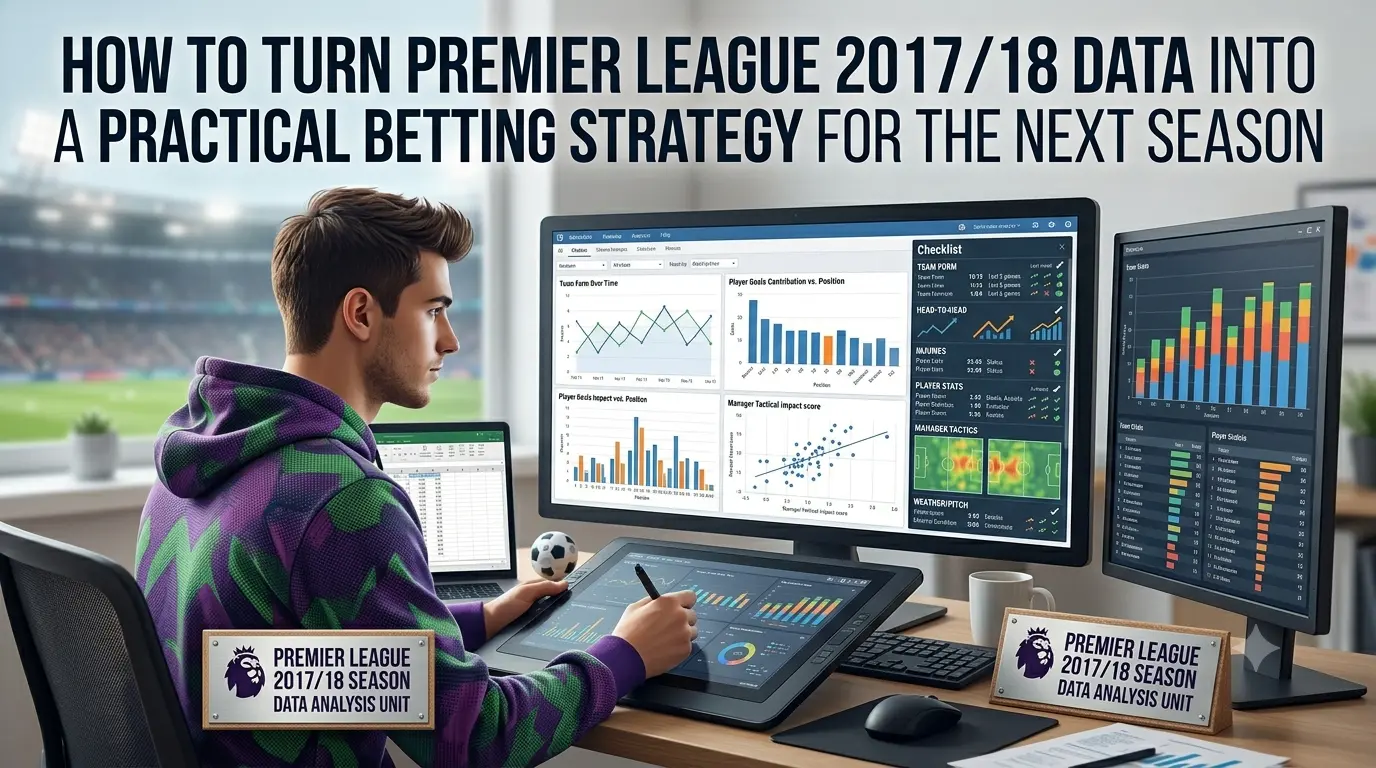
Raw data from a completed season has limited value unless it is translated into forward-looking decisions. The 2017/18 Premier League season offers a complete dataset, but the real advantage comes from interpreting which patterns are repeatable and which are not. Serious bettors use past data as a foundation, not a conclusion.
Why Past Data Needs Transformation, Not Repetition
Historical statistics reflect conditions that no longer fully exist. The cause is changes in squads, tactics, and context, the outcome is partial relevance, and the impact is potential misapplication.
This means data must be adjusted rather than reused directly.
Identifying Which Metrics Carry Forward
Not all statistics have equal predictive value. Some are stable across seasons, while others fluctuate significantly.
Reliable carryover metrics include:
- Chance creation patterns measured through expected goals.
- Defensive structure reflected in shot quality allowed.
- Tactical consistency in possession and pressing intensity.
- Home and away performance trends over multiple seasons.
- Managerial style influencing long-term team behavior.
These metrics matter because they represent underlying processes rather than outcomes.
Filtering Out Noise from One-Season Data
Single-season anomalies often distort interpretation. The cause is variance, the outcome is misleading trends, and the impact is flawed projections.
Filtering requires distinguishing between sustainable patterns and temporary deviations.
Building a Forward-Looking Model
A structured approach transforms data into actionable insights.
A practical model includes:
- Establishing baseline performance from previous season metrics.
- Adjusting for transfers, injuries, and managerial changes.
- Comparing early new-season data against adjusted expectations.
- Identifying deviations that suggest emerging trends.
- Aligning findings with market pricing to detect value.
This process ensures that data informs decisions rather than dictates them.
When Historical Trends Become Valuable Again
Past data regains value when it aligns with current conditions. The cause is structural continuity, the outcome is predictive relevance, and the impact is improved accuracy.
Conditions for Reusable Trends
Trends are more reliable when:
- Team structure remains largely unchanged.
- Tactical approach is consistent across seasons.
- Key players continue to influence performance.
These conditions reduce uncertainty and increase confidence in projections.
Translating Data Into Real Betting Decisions
Data only becomes useful when it influences actual bets. In scenarios where a sports betting service like ufabet app reflects general market expectations, refined data interpretation can reveal gaps between perception and probability. This creates opportunities where informed decisions outperform reactive ones.
Common Mistakes When Using Past Season Data
Errors often occur when bettors treat data as static truth rather than dynamic input.
Frequent mistakes include:
- Assuming trends will continue without adjustment.
- Ignoring contextual changes affecting team performance.
- Overvaluing statistical outliers from a single season.
- Failing to integrate market behavior into analysis.
- Using too many variables without clear prioritization.
These mistakes reduce clarity and weaken decision-making.
Comparing Data-Driven vs Assumption-Based Planning
The contrast between these approaches defines long-term effectiveness.
- Data-driven planning: Structured, evidence-based, adaptable.
- Assumption-based planning: Subjective, inconsistent, resistant to change.
- Data-driven planning: Adjusts as new information becomes available.
- Assumption-based planning: Relies on fixed beliefs.
- Data-driven planning: Focuses on probability and value.
- Assumption-based planning: Focuses on prediction and opinion.
This comparison highlights why structured analysis leads to more stable outcomes.
Environmental Influence on Data Interpretation
Observation indicates that a casino can present simplified statistics that emphasize recent performance over deeper trends. This can lead bettors to prioritize short-term data while overlooking more meaningful long-term patterns.
Where Data-Based Planning Breaks Down
Even well-structured models cannot eliminate uncertainty. The limitation lies in overconfidence in data without accounting for unpredictable variables.
Football remains influenced by factors that cannot be fully quantified.
Summary
Transforming 2017/18 Premier League data into a strategy for future seasons requires selective interpretation, contextual adjustment, and disciplined application. By focusing on stable metrics, filtering noise, and aligning insights with market behavior, bettors can build a more effective and adaptable approach.