Types of Digital Marketing and When Each One Makes Sense
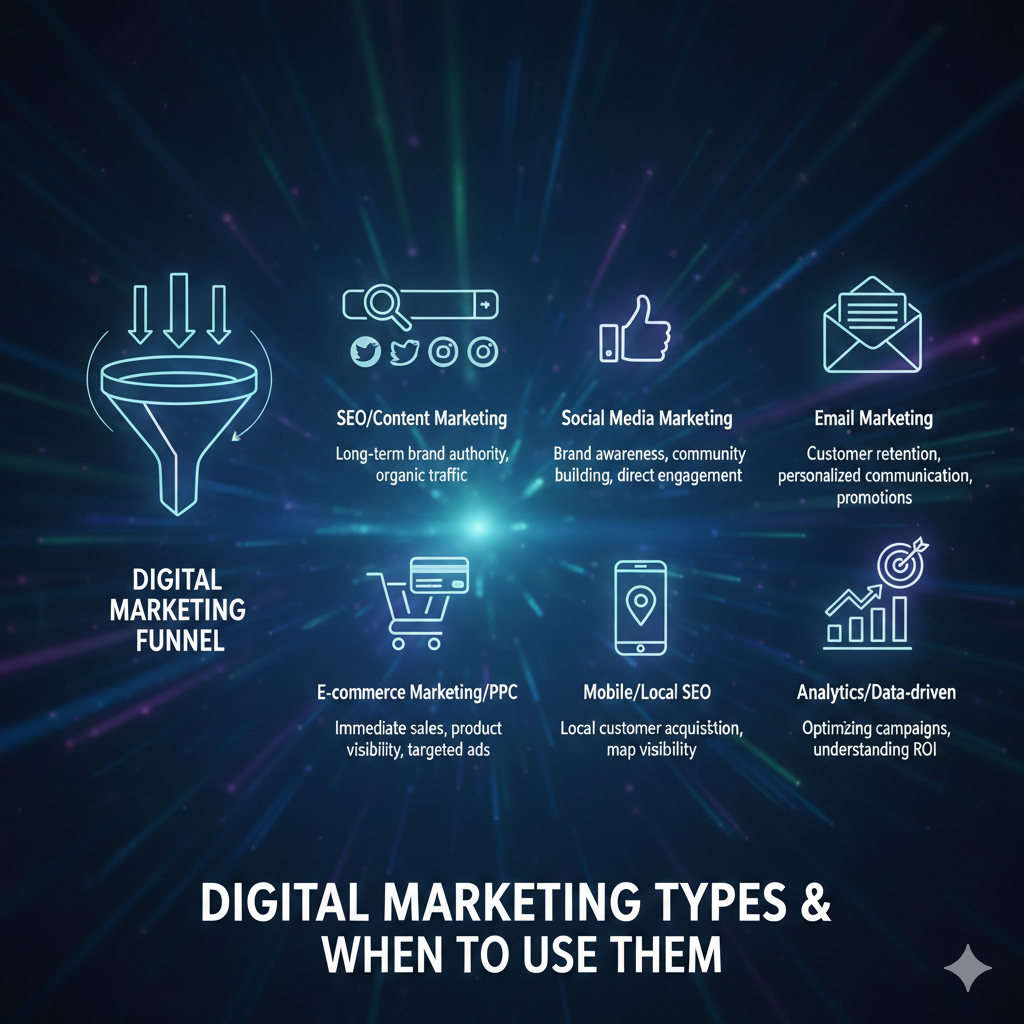
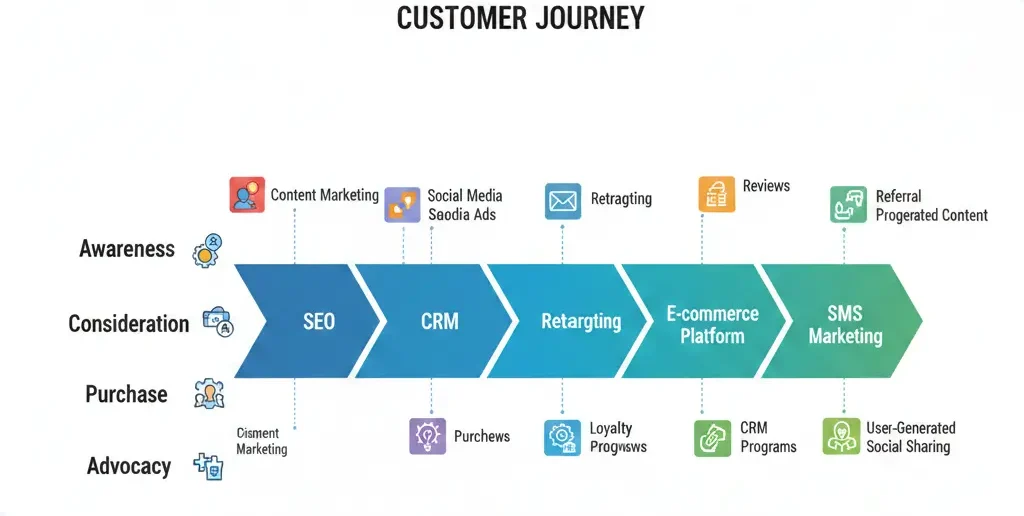
The types of digital marketing include search, content, social media, email, and paid advertising—and each works best at a different stage of the customer journey. Choosing the right type isn’t about trends; it’s about matching the channel to user intent, timing, and resources.
Why this matters now
Many businesses fail at digital marketing not because the channels don’t work, but because they use the wrong channel for the wrong goal. Understanding when each type makes sense prevents wasted effort and unrealistic expectations.
A quick mental model: match channel to intent
Before diving into definitions, here’s a simple rule from real-world use:
- High intent → Search
- Low awareness → Social
- Trust building → Content
- Retention → Email
- Speed & testing → Paid ads
When channels align with intent, results feel predictable instead of random.
- Search Engine Optimization (SEO)
SEO focuses on showing up when people actively search for answers, services, or solutions.
Best for:
- Long-term visibility
- High-intent traffic
- Educational and comparison content
When it makes sense:
If your audience is already searching for what you offer, SEO compounds value over time.
Common mistake:
Optimizing pages before understanding what people actually search for.
Fix: Start with real queries and intent, not keywords alone.
- Content Marketing
Content marketing uses articles, guides, videos, or resources to educate and build trust.
Best for:
- Explaining complex ideas
- Establishing authority
- Supporting SEO and email
When it makes sense:
When decisions require understanding, reassurance, or comparison.
[Pro-Tip] From practical experience, content performs best when written to remove confusion, not to impress.
- Social Media Marketing
Social media helps people discover ideas, brands, and perspectives they weren’t actively searching for.
Best for:
- Awareness
- Community building
- Visual or personality-driven brands
When it makes sense:
If your product benefits from demonstration, storytelling, or lifestyle context.
Common mistake:
Expecting social media to convert cold audiences instantly.
Fix: Use social to warm interest, not close every sale.
- Email Marketing
Email is about maintaining relationships once attention is earned.
Best for:
- Retention
- Repeat engagement
- Personalized communication
When it makes sense:
After someone has shown interest—downloaded a guide, subscribed, or purchased.
[Expert Warning] Email works when value outweighs frequency. Over-emailing erodes trust faster than silence.
- Paid Digital Advertising
Paid ads include search ads, social ads, and display placements.
Best for:
- Speed
- Testing offers
- Scaling proven messages
When it makes sense:
When you already know what converts and want faster results.
Common mistake:
Using ads to fix unclear messaging.
Fix: Validate organically first.
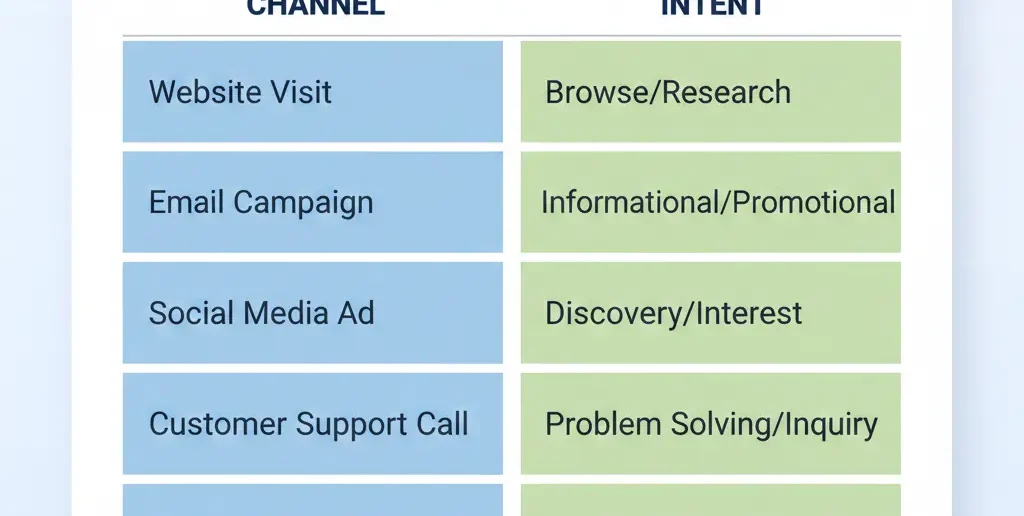
Comparison table: channels vs. real outcomes
| Digital Marketing Type | Primary Strength | Time to Results | Typical Risk |
| SEO | Sustainable traffic | Medium–Long | Impatience |
| Content | Trust & clarity | Medium | Inconsistency |
| Social Media | Discovery | Short–Medium | Low intent |
| Retention | Short | Overuse | |
| Paid Ads | Speed | Immediate | Wasted spend |
Information Gain: why “all channels” is usually wrong
Many guides promote omnichannel marketing early. In reality, depth beats breadth. Teams that master one or two channels outperform those spreading thin across five—especially with limited resources.
Myth vs Reality (unique section)
Myth: Your business needs to be active on every platform.
Reality: Your business needs to be effective where your audience already pays attention.
This shift alone saves time, money, and burnout.
How to choose the right type for you
Ask three questions:
- Are people already searching for this?
- Does this require explanation or demonstration?
- How patient can you afford to be?
Your answers point directly to the right channel.
[Money-Saving Recommendation] Start with one primary channel and one support channel. Add more only after measurable traction.
Watch for clarity (recommended video)
- YouTube: https://www.youtube.com/watch?v=VbP1p3Z6M7c
Explains digital marketing channels with real examples and use cases.
Image & infographic suggestions (1200×628 px)
- Hero image: “Digital marketing channels mapped to customer journey”
Alt text: Types of digital marketing mapped to awareness, consideration, and decision stages - Infographic: “Channel vs intent comparison table”
Alt text: Comparison of digital marketing channels based on intent and time to results
FAQs (schema-ready)
Which type of digital marketing works best?
The best type depends on your audience’s intent and how they make decisions.
Can I skip social media?
Yes, if your audience doesn’t rely on it for discovery.
Is SEO better than paid ads?
SEO compounds over time; paid ads offer speed. They serve different purposes.
Do I need content for every channel?
Content supports most channels, but its format should adapt to each.
How many channels should beginners use?
Usually one primary and one supporting channel is enough.
Can small businesses compete with big brands?
Yes—by being clearer, more specific, and more helpful.
Internal linking plan
- foundational digital marketing overview → What Is Digital Marketing? A Clear, Real-World Explanation
- beginner-friendly starting point → Digital Marketing for Beginners: Where to Start and Why
Conclusion
Understanding the types of digital marketing isn’t about memorization—it’s about selection. When you match the right channel to the right goal, marketing feels efficient instead of exhausting. Start focused, learn from signals, and expand only when it makes sense.
Publishing checklist (quick)
- Featured snippet answer included early
- Long, human-readable paragraphs
- Unique structure and examples
- Images sized 1200×628 px with SEO alt text
👉 Say “Post 4” to continue with the next article in Category 1.
Post: Types of Digital Marketing and When Each One Makes Sense
Meta Title (55–60 chars)
Types of Digital Marketing Explained (When to Use Each)
Meta Description (150–160 chars)
Learn the main types of digital marketing, what each channel is best for, and how to choose the right one based on goals and timing.
Suggested URL Slug
/digital-marketing/types-of-digital-marketing
Types of Digital Marketing and When Each One Makes Sense
The types of digital marketing include search, content, social media, email, and paid advertising—and each works best at a different stage of the customer journey. Choosing the right type isn’t about trends; it’s about matching the channel to user intent, timing, and resources.
Why this matters now
Many businesses fail at digital marketing not because the channels don’t work, but because they use the wrong channel for the wrong goal. Understanding when each type makes sense prevents wasted effort and unrealistic expectations.
A quick mental model: match channel to intent
Before diving into definitions, here’s a simple rule from real-world use:
- High intent → Search
- Low awareness → Social
- Trust building → Content
- Retention → Email
- Speed & testing → Paid ads
When channels align with intent, results feel predictable instead of random.
- Search Engine Optimization (SEO)
SEO focuses on showing up when people actively search for answers, services, or solutions.
Best for:
- Long-term visibility
- High-intent traffic
- Educational and comparison content
When it makes sense:
If your audience is already searching for what you offer, SEO compounds value over time.
Common mistake:
Optimizing pages before understanding what people actually search for.
Fix: Start with real queries and intent, not keywords alone.
- Content Marketing
Content marketing uses articles, guides, videos, or resources to educate and build trust.
Best for:
- Explaining complex ideas
- Establishing authority
- Supporting SEO and email
When it makes sense:
When decisions require understanding, reassurance, or comparison.
[Pro-Tip] From practical experience, content performs best when written to remove confusion, not to impress.
- Social Media Marketing
Social media helps people discover ideas, brands, and perspectives they weren’t actively searching for.
Best for:
- Awareness
- Community building
- Visual or personality-driven brands
When it makes sense:
If your product benefits from demonstration, storytelling, or lifestyle context.
Common mistake:
Expecting social media to convert cold audiences instantly.
Fix: Use social to warm interest, not close every sale.
- Email Marketing
Email is about maintaining relationships once attention is earned.
Best for:
- Retention
- Repeat engagement
- Personalized communication
When it makes sense:
After someone has shown interest—downloaded a guide, subscribed, or purchased.
[Expert Warning] Email works when value outweighs frequency. Over-emailing erodes trust faster than silence.
- Paid Digital Advertising
Paid ads include search ads, social ads, and display placements.
Best for:
- Speed
- Testing offers
- Scaling proven messages
When it makes sense:
When you already know what converts and want faster results.
Common mistake:
Using ads to fix unclear messaging.
Fix: Validate organically first.
Comparison table: channels vs. real outcomes
| Digital Marketing Type | Primary Strength | Time to Results | Typical Risk |
| SEO | Sustainable traffic | Medium–Long | Impatience |
| Content | Trust & clarity | Medium | Inconsistency |
| Social Media | Discovery | Short–Medium | Low intent |
| Retention | Short | Overuse | |
| Paid Ads | Speed | Immediate | Wasted spend |
Information Gain: why “all channels” is usually wrong
Many guides promote omnichannel marketing early. In reality, depth beats breadth. Teams that master one or two channels outperform those spreading thin across five—especially with limited resources.
Myth vs Reality (unique section)
Myth: Your business needs to be active on every platform.
Reality: Your business needs to be effective where your audience already pays attention.
This shift alone saves time, money, and burnout.
How to choose the right type for you
Ask three questions:
- Are people already searching for this?
- Does this require explanation or demonstration?
- How patient can you afford to be?
Your answers point directly to the right channel.
[Money-Saving Recommendation] Start with one primary channel and one support channel. Add more only after measurable traction.
Watch for clarity (recommended video)
- YouTube: https://www.youtube.com/watch?v=VbP1p3Z6M7c
Explains digital marketing channels with real examples and use cases.
Image & infographic suggestions (1200×628 px)
- Hero image: “Digital marketing channels mapped to customer journey”
Alt text: Types of digital marketing mapped to awareness, consideration, and decision stages - Infographic: “Channel vs intent comparison table”
Alt text: Comparison of digital marketing channels based on intent and time to results
FAQs (schema-ready)
Which type of digital marketing works best?
The best type depends on your audience’s intent and how they make decisions.
Can I skip social media?
Yes, if your audience doesn’t rely on it for discovery.
Is SEO better than paid ads?
SEO compounds over time; paid ads offer speed. They serve different purposes.
Do I need content for every channel?
Content supports most channels, but its format should adapt to each.
How many channels should beginners use?
Usually one primary and one supporting channel is enough.
Can small businesses compete with big brands?
Yes—by being clearer, more specific, and more helpful.
Internal linking plan
- foundational digital marketing overview → What Is Digital Marketing? A Clear, Real-World Explanation
- beginner-friendly starting point → Digital Marketing for Beginners: Where to Start and Why
Conclusion
Understanding the types of digital marketing isn’t about memorization—it’s about selection. When you match the right channel to the right goal, marketing feels efficient instead of exhausting. Start focused, learn from signals, and expand only when it makes sense.