Introduction
Digital marketing examples are everywhere online—but most only show what was done, not why it worked. Copying tactics without understanding the strategy behind them often leads to wasted effort and frustration.
The real power of digital marketing comes from matching the right message to the right audience at the right time. That’s what makes campaigns effective, measurable, and adaptable across industries.
In this guide, we break down real digital marketing examples with a clear framework, showing the logic behind decisions so you can apply them to your own business or project. You’ll learn how audience intent, channel selection, messaging, and action steps work together to drive results—and how small, focused strategies often outperform flashy but shallow campaigns.
A photo collage maker can enhance digital marketing campaigns by combining multiple visuals into one engaging design.
Why this matters now “digital marketing examples”
Most online examples focus on success stories without context. Beginners try to copy them and fail because the conditions were different. This article breaks down digital marketing examples in a practical way, showing the logic behind decisions so you can adapt ideas instead of blindly repeating them.
A simple lens for reading any digital marketing example
Before looking at examples, use this framework:
- Audience intent – What problem was urgent?
- Primary channel – Where was attention already present?
- Core message – What made it clear and trustworthy?
- Action step – What was the next logical move?
If an example doesn’t answer these four points, it’s incomplete.
Example 1: SEO + Content (service-based business)
Scenario: A local service business struggling with inconsistent leads.
What they did
- Identified 5 common customer questions from real inquiries
- Published clear, non-salesy guides answering those questions
- Optimized pages for search intent, not keywords
Why it worked
People searching those questions were already close to a decision. The content reduced uncertainty.
Common mistake to avoid
Publishing generic blog posts with no buyer intent.
Fix: Write for decision-stage questions first.
Example 2: Social Media + Content Repurposing
Scenario: A solo creator with limited time.
What they did
- Wrote one long guide
- Repurposed it into short social posts
- Linked back to the original resource
Why it worked
Consistency and clarity—not virality—built recognition.
[Pro-Tip] From real usage, repurposing one strong idea outperforms creating ten weak ones.
Example 3: Email Marketing for Retention
Scenario: An online educator losing repeat engagement.
What they did
- Reduced email frequency
- Focused on one actionable insight per email
- Linked emails to deeper resources
Why it worked
Value density increased trust, which increased opens and replies.
[Expert Warning] Email fails when it exists only to “stay in touch” instead of solving problems.
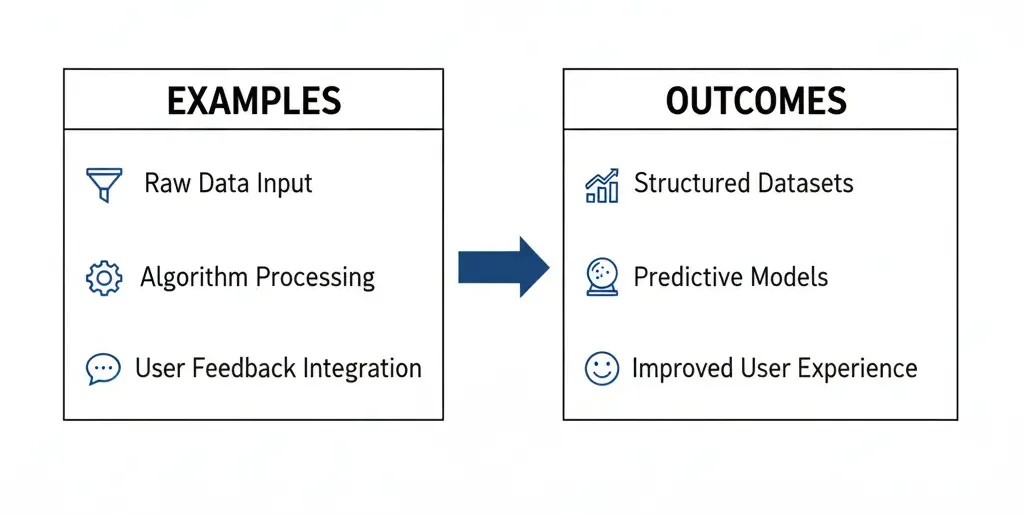
Comparison table: examples vs outcomes
| Example Type | Primary Channel | Goal | Key Lesson |
| Service SEO | Search + Content | Lead generation | Answer real questions |
| Creator growth | Social + Content | Authority | Reuse strong ideas |
| Email strategy | Retention | Fewer, better messages |
Information Gain: what most examples leave out
Most digital marketing examples skip constraints—budget, time, skill level. In practice, success often comes from removing complexity. The winning move is usually subtraction, not addition.
Unique section: Practical insight from experience
What beginners often overlook is that clarity compounds faster than creativity. Clear explanations build trust, trust drives engagement, and engagement signals platforms to amplify your content naturally.
[Money-Saving Recommendation] Before running ads, test your message organically. If people don’t engage for free, paying won’t fix it.
How to apply these examples to your own case
Ask yourself:
- What question do customers ask before buying?
- Where do they already search or scroll?
- What’s the simplest way to answer clearly?
Start there.
Watch real examples explained
- YouTube: https://www.youtube.com/watch?v=8pF2FzJ8F6U
Breakdown of real digital marketing examples and why they worked.
FAQs
Are digital marketing examples reusable?
Only if you adapt them to your audience and context.
Why do copied strategies fail?
Because timing, intent, and trust levels differ.
Which example works best for beginners?
SEO + clear content usually offers the strongest learning signals.
Do small wins matter?
Yes—small, consistent wins compound over time.
Should I follow case studies exactly?
No. Extract principles, not tactics.
Internal linking plan
- Types of Digital Marketing and When Each One Makes Sense
-
Digital Marketing Examples That Show How Strategy Works
External link
Conclusion
Digital marketing examples are useful only when you understand the strategy behind them. Focus on intent, clarity, and constraints. When you do, examples become lessons—not distractions.