Introduction
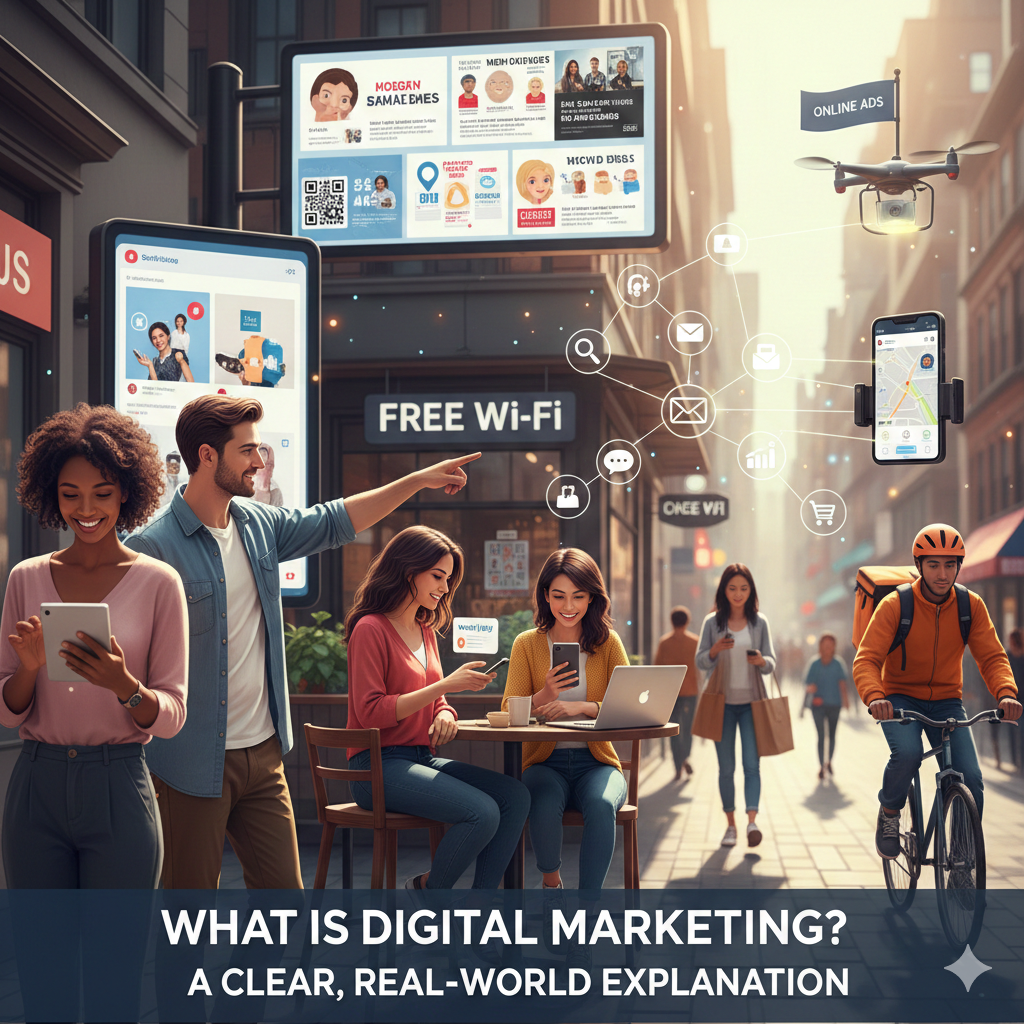
Digital marketing is how people discover, evaluate, and choose products, services, or ideas in the online world. It includes the channels we use every day—search engines, content platforms, social media, email, and paid advertising.
At its core, digital marketing isn’t about pushing messages at random. It works by understanding what people are trying to accomplish right now and showing them helpful, relevant experiences at the right moment. When done well, it connects real user needs with the right solution—across the digital spaces where decisions actually happen.
Why this matters now digital marketing
Over the last few years, attention shifted from single platforms to journeys. People research on search, compare on social, and decide via email or reviews. Understanding digital marketing as a connected system—not a bag of tactics—helps you invest time and money where it actually converts.
How digital marketing actually works (without textbook theory)
At its core, digital marketing is a loop:
Intent appears (a question, need, or curiosity).
Visibility happens (search results, a social post, an email).
Trust builds (clear explanations, proof, consistency).
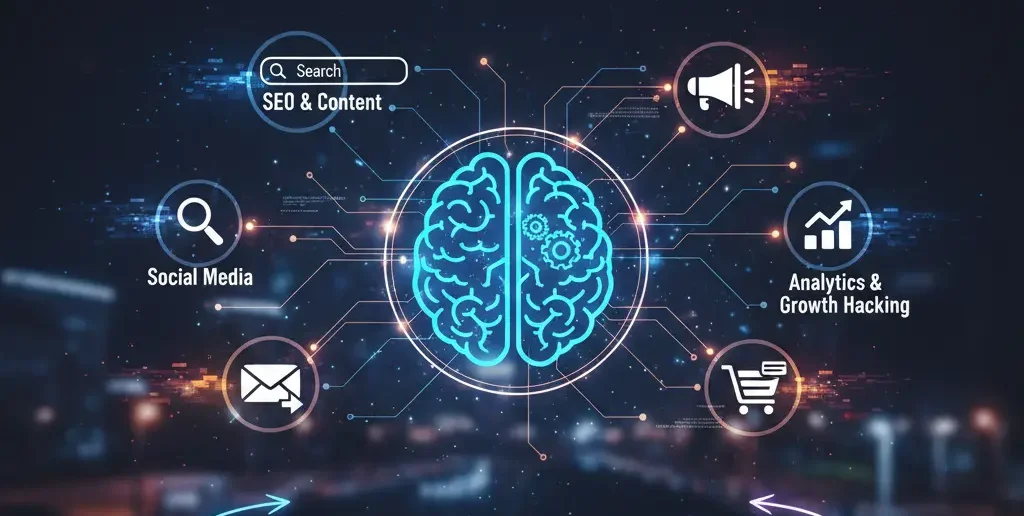
Action follows (subscribe, inquire, buy, share).
Signals feed back (engagement tells platforms what to show next).
When this loop is healthy, growth compounds. When it’s broken, tactics feel random.
The main channels—explained by use, not buzzwords
Search (SEO & Paid Search)
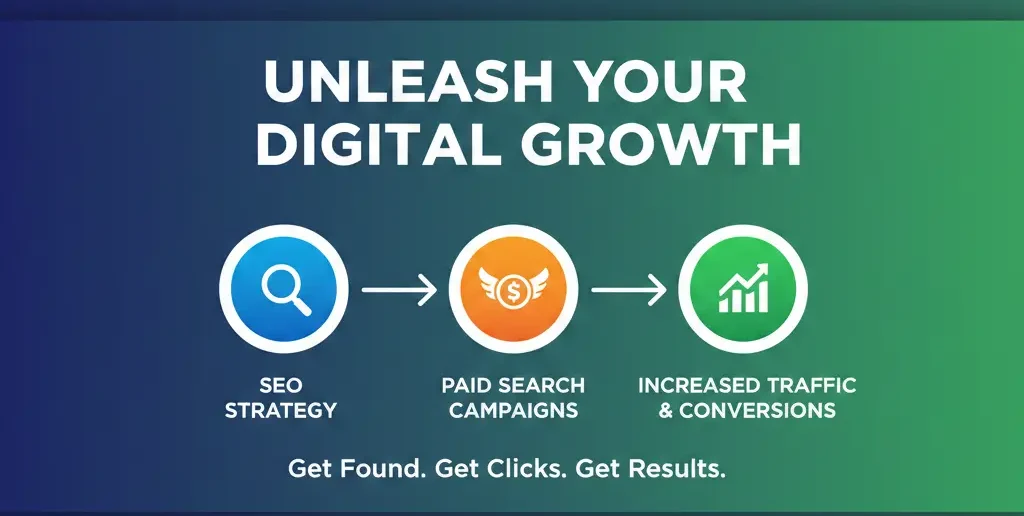
Search captures existing demand. People already want something; your job is to be the clearest answer.
Content (Blogs, Guides, Video)
Content earns trust over time. It explains, demonstrates, and reassures—especially for higher-consideration decisions.
Social Platforms
Social is discovery and context. It introduces ideas and shapes perception rather than closing every sale.
Email & Messaging
Email turns attention into relationships. It’s where consistency pays off.
Paid Media
Paid buys speed and testing. It’s most effective when it amplifies what already works organically.
A practical table: channels vs. outcomes
| Channel | Best For | Time to Impact | Common Pitfall |
| Search (SEO) | Long-term demand | Medium–Long | Chasing keywords without intent |
| Content | Trust & education | Medium | Publishing without distribution |
| Social | Awareness & engagement | Short–Medium | Expecting instant sales |
| Retention & repeat value | Short | Over-emailing without value | |
| Paid | Speed & validation | Short | Scaling before proof |
Common mistakes beginners make (and how to fix them)
Mistake 1: Treating channels separately.
Fix: Design one message that adapts to each channel’s role.
Mistake 2: Expecting instant results everywhere.
Fix: Pair one fast channel (paid or social) with one compounding channel (search or content).
Mistake 3: Tool overload.
Fix: Start with essentials only; add tools after you see traction.
[Expert Warning] If you can’t explain why a channel should work for your audience, it won’t—no matter how popular it looks.
Information Gain: what most definitions miss
Most explanations list channels. What they miss is timing. Digital marketing succeeds when you appear at the right moment—not everywhere. A simple rule from real usage: optimize for moments of decision, then support with education before and after that moment.
A real-world scenario (small team, no hype)
A two-person service business focused on one search topic, published three deep guides, shared short summaries on social, and followed up with a weekly email. No ads. In 90 days, inquiries doubled—not because of volume, but because the content answered exactly what prospects were asking.
[Pro-Tip] Before publishing anything, write the one question your reader is trying to solve today. Make the first paragraph answer it plainly.
How to start—without overwhelm
Choose one audience problem.
Pick one primary channel to reach it.
Create one clear asset (guide, video, or page).
Measure engagement, not vanity metrics.
Iterate once you see signals.
[Money-Saving Recommendation] Start organic before paying for ads. Paid works best when it amplifies proven messages.
Helpful resources (watch & learn)
YouTube: https://www.youtube.com/watch?v=9sE7aQH4g9k
A concise overview of digital marketing channels and how they connect.
FAQs
Is digital marketing only about online ads?
No. Ads are one part. Search visibility, content, email, and trust signals matter just as much.
Do small businesses need all channels?
No. One or two well-chosen channels outperform scattered efforts.
How long does digital marketing take to work?
Paid can work quickly; search and content compound over months.
Is SEO part of digital marketing?
Yes. SEO captures demand when people are actively searching.
Can one person manage digital marketing?
At the start, yes—if the scope is focused.
What metrics actually matter?
Engagement, qualified inquiries, and retention—more than likes or impressions.
Internal linking plan
SEO for Beginners: Step-by-Step Without the Confusion
Free Marketing Tools Online That Actually Help
External Links
Digital marketing definition
User intent & decision journeys
Conclusion
Digital marketing isn’t about doing everything—it’s about doing the right things at the right time. Focus on intent, connect channels into a simple loop, and measure what moves decisions. Start small, stay consistent, and let clarity compound.