Introduction
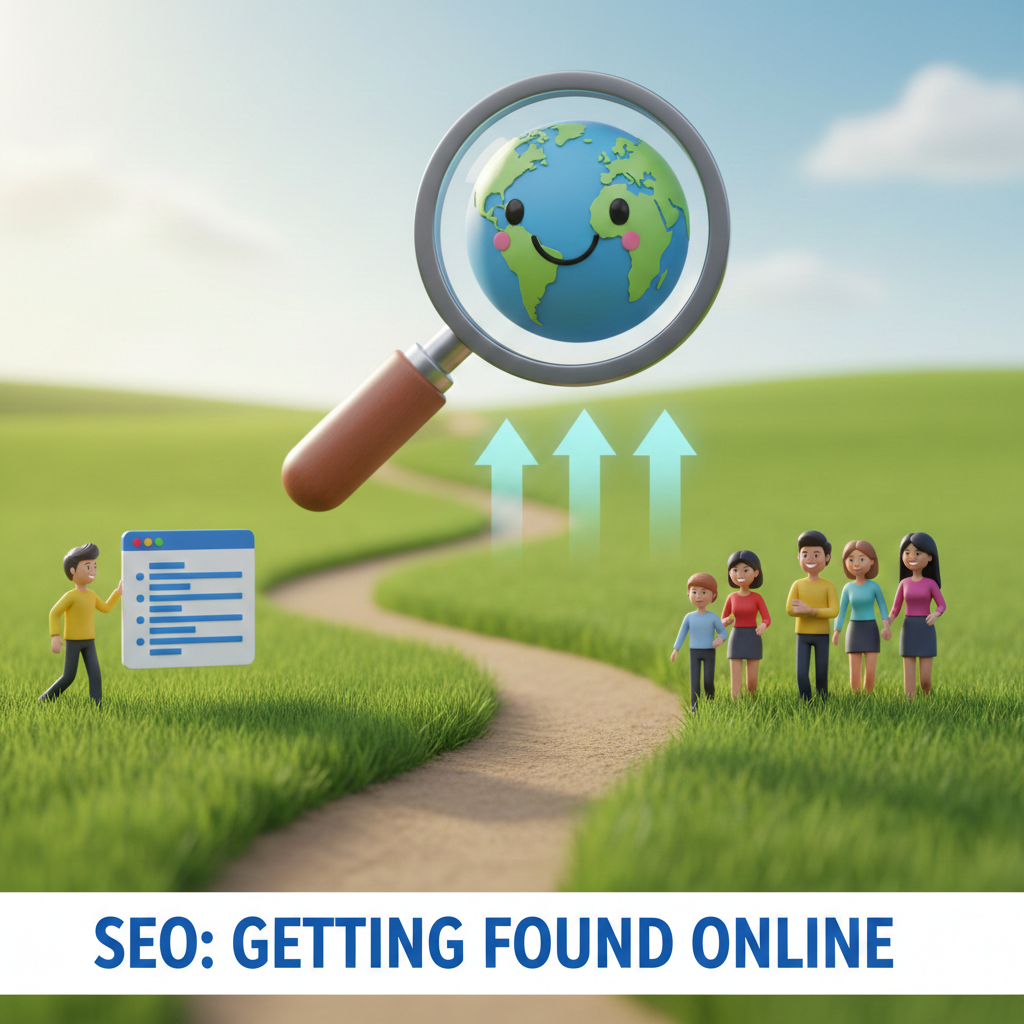
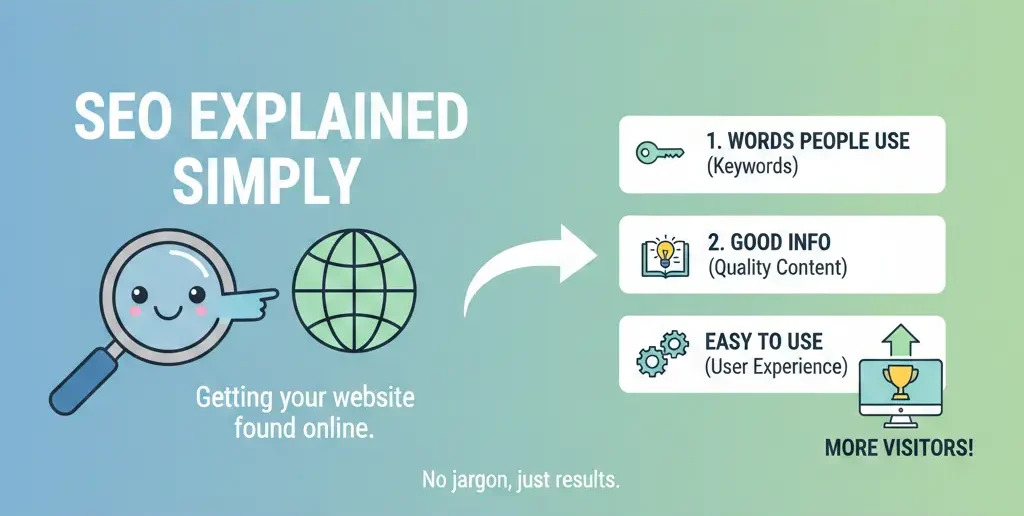
SEO in Simple Words, or Search Engine Optimization, is the process of making your website easier for search engines like Google to find, understand, and show to people. In simple words, it helps your website appear in search results when someone looks for topics related to your content, products, or services.
For beginners, SEO may sound complicated because it involves keywords, links, technical setups, and content strategies—but at its core, it’s about making your website useful, easy to navigate, and relevant for both users and search engines.
In this guide, you’ll learn what SEO really is, why it matters, and the basic steps you can take to help your website get more visitors. By the end, you’ll understand how search engines work and how to make your website stand out online, even if you’re just starting out.
Why this matters now : What Is SEO in Simple Words
Many explanations make Simple Words SEO sound technical on purpose. That confusion pushes beginners toward tools and shortcuts before they understand the basics. When SEO is explained plainly, it becomes easier to learn—and harder to misuse.
SEO without jargon (the simplest explanation)
Think of SEO as a conversation:
- Someone asks a question in search
- Search engines look for pages that answer it
- Pages that explain clearly and keep readers engaged rise over time
That’s SEO—clarity matched to intent. Simple Words
[Pro-Tip] From real usage, pages written to teach outperform pages written to rank.
How SEO actually works (step by step)
1) A search happens
People search to learn, compare, or decide.
2) Pages are evaluated
Search engines check topic relevance, structure, and signals from readers (time on page, scrolling, follow-up clicks).
3) Results are ordered
Pages that satisfy the intent better move up. Confusing pages drift down.
No hacks required.
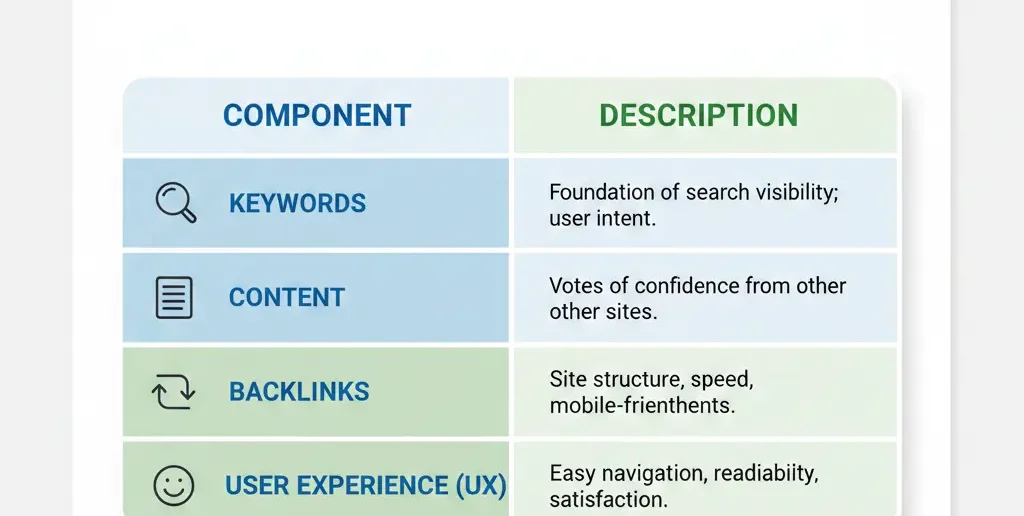
Common SEO terms—translated
| SEO Term | What It Means in Plain English |
| Keyword | The topic being searched |
| Ranking | Where your page appears |
| Optimization | Making things clearer |
| Backlinks | Other sites referencing you |
| Authority | Being consistently helpful |
If you understand this table, you understand SEO.
What SEO is not (important)
- Repeating keywords unnaturally
- Instant traffic on day one
- A replacement for a good offer
- A one-time setup
[Expert Warning] If a human doesn’t understand your page quickly, search engines won’t reward it long-term.
Information Gain: the part most guides miss
SEO isn’t about pleasing search engines—it’s about reducing confusion faster than competing pages. When your content answers one missing question or explains one step more clearly, engagement improves—and rankings follow. Simple Words
Unique section: Beginner mistake most people make
Beginners often write for algorithms instead of people. This leads to awkward phrasing and thin explanations. Writing like you’re helping a curious friend usually performs better. Simple Words
[Money-Saving Recommendation] Don’t buy SEO tools until you can explain your topic clearly on one page.
A simple SEO checklist you can use today
- One clear topic per page
- Headings that explain the flow
- Examples that make ideas obvious
- Internal links that add context
- Images that support understanding
Watch: SEO explained visually
- YouTube: https://www.youtube.com/watch?v=El3IZFGERbM
Beginner-friendly explanation of SEO in simple language.
FAQs
Is SEO really that simple?
The concept is simple; consistency makes it effective.
Do I need coding for SEO?
No. Writing clarity matters more at the start.
How long does SEO take to work?
Engagement improves first; rankings compound over months.
Are backlinks required?
Helpful content comes first; references help later.
Is SEO still worth learning?
Yes. Search remains a high-intent channel.
Internal linking plan
- for Beginners: Step-by-Step Without the Confusion
- What Is Digital Marketing? A Clear, Real-World Explanation
External link
Conclusion
SEO in simple words is about helping people find clear answers. Focus on relevance, clarity, and usefulness. When readers understand your page easily, search engines usually do too.