Introduction
SEO for Beginners Search Engine Optimization (SEO) can feel overwhelming for beginners. With so many techniques, tools, and advice online, it’s easy to get lost in jargon and conflicting tips. But SEO doesn’t have to be complicated.
This guide breaks down SEO step by step, showing you how to grow your website traffic, improve search rankings, and attract the right audience—without confusion or unnecessary complexity. Whether you’re starting a blog, business site, or portfolio, these beginner-friendly steps will give you a clear roadmap to optimize your website the smart way.
By the end, you’ll understand not just what SEO is, but how to apply it practically, so every action you take moves your website closer to visibility and growth.
Why this matters now SEO for Beginners
Search has become stricter about usefulness. Pages that actually answer questions win. Beginners who learn SEO as a system—rather than a checklist—avoid wasted effort and see steadier progress.
A beginner-safe SEO roadmap (in the right order)
Step 1: Understand search intent (before keywords)
Ask: What is the searcher trying to accomplish right now?
- Learn → explanations, guides
- Compare → options, pros/cons
- Decide → pricing, steps, next actions
[Pro-Tip] SEO for Beginners From real usage, pages aligned to intent outperform “optimized” pages with perfect formatting.
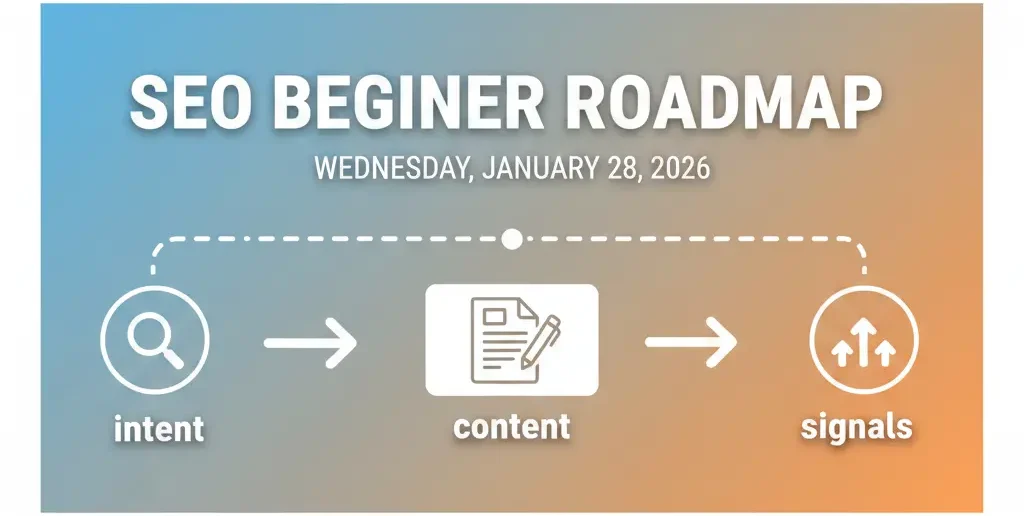
Step 2: Pick one primary topic (not 50 keywords)
Choose a focused topic you can explain better than competitors. Depth beats breadth early on.
Step 3: Create the clearest answer on the internet
Write for humans first: simple language, examples, and structure that matches how people read.
Step 4: Make on-page basics obvious
Titles, headings, internal links, and images should reinforce the same idea—no mixed messages.
Step 5: Publish consistently and observe signals
Watch engagement (time on page, scroll, follow-up questions). Iterate before scaling.
How search engines really evaluate pages (plain English)
Search engines look for:
- Relevance: Does this page answer the query?
- Usefulness: Do people engage and stay?
- Clarity: Is the topic easy to understand?
- Trust signals: Is it consistent, cited, and helpful?
They don’t “like” tricks; they reward understanding. SEO for Beginners
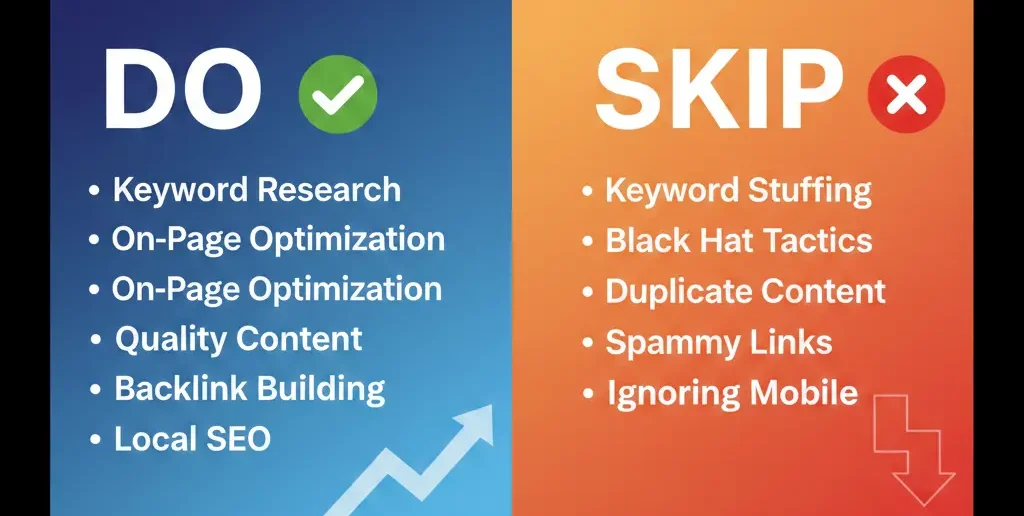
A practical table: what beginners should do vs. skip
| Do This First | Why It Works | Skip Early |
| Intent-first outline | Matches real needs | Keyword stuffing |
| One strong topic | Builds authority | Thin posts |
| Clear headings | Improves scanning | Over-formatting |
| Internal links | Contextual relevance | Link spam |
Common beginner mistakes (and fixes)
Mistake: Starting with tools and scores
Fix: Start with questions people ask.
Mistake: Writing for algorithms
Fix: Write to remove confusion.
Mistake: Publishing and forgetting
Fix: Improve pages based on engagement.
[Expert Warning] If your page can’t satisfy a searcher in 60 seconds, rankings won’t stick.
Information Gain: the overlooked SEO advantage
Most guides push keywords first. SEO for Beginners What they miss is information gain—adding clarity competitors don’t. If your page explains one missing step better than the top results, you earn trust signals that compound.
Unique section: Real-world learning path (experience)
In practical situations, beginners who publish one excellent page and refine it weekly learn faster than those posting ten average articles. Improvement beats volume early. SEO for Beginners
[Money-Saving Recommendation] Delay paid SEO tools until you can explain your topic clearly without them.
On-page SEO basics that still matter (quick hits)
- One clear H1 that matches intent
- Descriptive subheadings (H2/H3)
- Helpful images with alt text
- Internal links that add context
Learn visually (recommended watch)
- YouTube: https://www.youtube.com/watch?v=gmB_TC92I8w
A beginner-friendly explanation of SEO focused on intent and clarity.
FAQs
Is SEO hard for beginners?
Not if you focus on intent and clarity first.
How long does SEO take to work?
Engagement signals appear in weeks; rankings compound over months.
Do I need backlinks at the start?
No. Useful content comes first.
How many posts should I publish?
Start with one strong page; expand after traction.
Are SEO tools required?
Helpful later, not required at the beginning.
Can beginners compete with big sites?
Yes—by being clearer and more specific.
Internal linking plan
External link
Conclusion
SEO for beginners isn’t about gaming search—it’s about understanding people. Start with intent, explain clearly, and improve based on real signals. Do this consistently, and SEO becomes predictable instead of confusing.