Introduction
free productivity tools for productivity don’t make you disciplined, motivated, or inspired — they make work easier by removing friction.
Most people chase productivity by reading more advice, watching more videos, and downloading more apps.
They look for the “perfect system” instead of fixing the one small thing slowing them down today.
The result?
A messy stack of tools.
More decisions.
More setup.
Less actual work getting done.
Real productivity is simple.
It comes from fewer decisions, clearer next steps, and protected focus.
That’s why this guide focuses on free online tools for productivity that quietly support execution — not flashy “all-in-one” apps that promise everything and deliver complexity.
Why this matters now free productivity tools
Productivity advice often overemphasizes motivation and underplays systems. In real workflows, people don’t need more inspiration—they need fewer decisions and smoother handoffs. This guide focuses on free tools that quietly support execution, especially for creators, small teams, and solo operators.
A useful way to choose free productivity tools
Ask three questions:
What’s slowing me down today? (planning, focus, follow-through)
What decision do I repeat too often? (priorities, next steps)
What should be automatic? (reminders, capture, tracking)
[Pro-Tip] From real usage, one tool that removes one repeated decision is more valuable than ten tools that promise “all-in-one” productivity.
Tool category 1: Task & planning tools (free tiers)
These tools help you see what to do next without thinking too hard.
What they’re good at
Capturing tasks quickly
Setting simple priorities
Keeping work visible
When they help most
You juggle multiple small tasks
You forget follow-ups
You lose momentum mid-week
Common mistake
Over-structuring with dozens of lists and labels.
Fix: Start with one list: Today / Next / Later.
[Expert Warning] If your task tool takes longer to manage than to do the task, it’s hurting productivity.
Tool category 2: Focus & distraction blockers
These tools protect attention—your scarcest resource.
What they’re good at
Limiting distracting sites
Encouraging focused sessions
Creating start/stop boundaries
When they help most
Deep work (writing, coding, design)
Repetitive browsing habits
Deadline-driven tasks
Reality check
Focus tools don’t create discipline; they protect it.
Tool category 3: Note-taking & capture tools
Good capture prevents mental overload.
What they’re good at
Saving ideas quickly
Organizing references
Reducing “don’t forget” stress
When they help most
Research-heavy work
Creative projects
Learning and planning
[Money-Saving Recommendation] Use one capture tool everywhere (desktop + mobile). Splitting notes across apps kills recall.
Tool category 4: Time awareness & lightweight tracking
Tracking isn’t about micromanaging—it’s about clarity.
What they’re good at
Showing where time actually goes
Identifying low-return activities
Improving estimates
When they help most
Freelancers and solopreneurs
Anyone feeling “busy but stuck”
Mistake to avoid
Tracking every minute forever.
Fix: Track for one week, then act on insights.
A practical table: free productivity tools by outcome
| Outcome Needed | Tool Type | Why It Helps |
| Clear priorities | Task manager | Reduces decision fatigue |
| Deep focus | Distraction blocker | Protects attention |
| Idea capture | Notes app | Prevents mental clutter |
| Time clarity | Time tracker | Reveals waste |
Information Gain: why free productivity tools fail
Most tools fail because they don’t change behavior. The win isn’t the app—it’s the habit the app supports. Choose tools that nudge action automatically (reminders, friction removal) rather than tools that require constant tending.
Unique section: Beginner mistake most people make
Beginners stack tools too early. In practice, productivity improves when you subtract. One task tool + one capture tool + one focus rule is enough for most people.
[Pro-Tip] If you’re setting up productivity tools instead of doing work, stop and simplify.
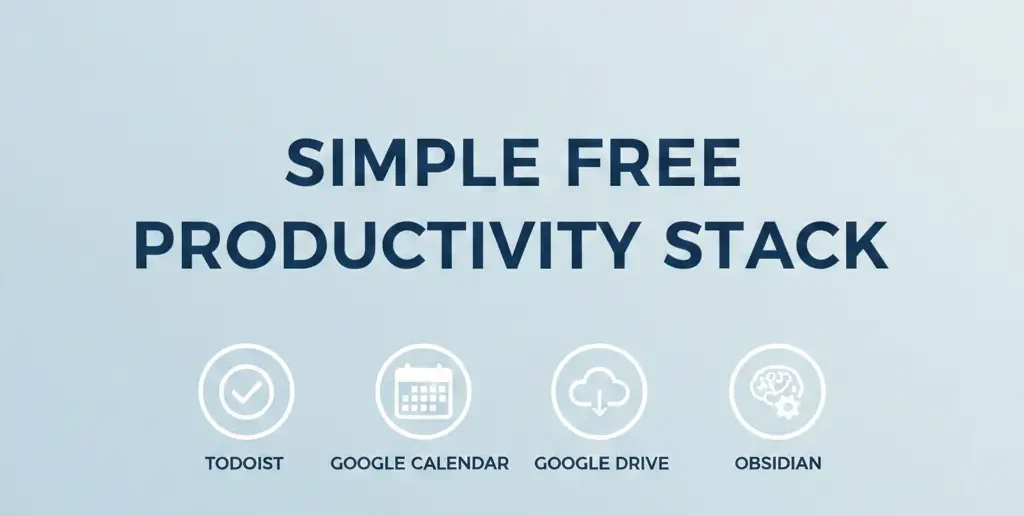
A simple free productivity tools stack
Tasks: One lightweight task manager (free tier)
Focus: One site blocker or timer
Capture: One notes app
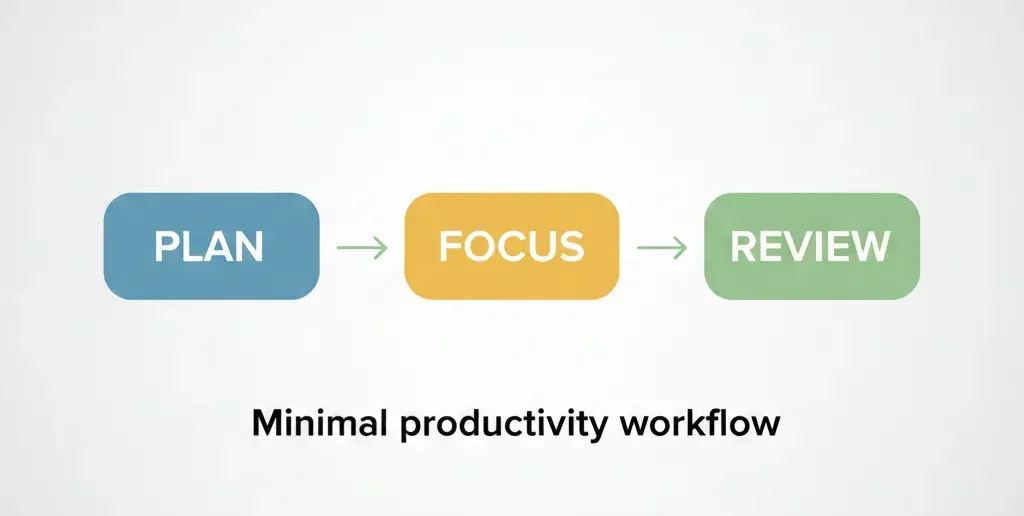
Review: One weekly check-in (calendar reminder)
That’s it.
How to implement this in a week free productivity tools
Day 1: Pick one task tool; migrate only active tasks.
Day 2: Add a focus rule (block one distracting site).
Day 3: Centralize notes into one app.
Day 4: Track time for one workday.
Day 5: Remove one tool that didn’t help.
Learn visually
YouTube: https://www.youtube.com/watch?v=Qm1X5wK8a9Q
Explains simple productivity systems using free tools.
FAQs
Are free productivity tools enough?
Yes. Many people never outgrow free tiers.
Which tool should I start with?
A simple task manager.
Do focus apps really work?
They help by removing temptation—not by forcing willpower.
How many tools should I use?
As few as possible—usually three or four.
Should I track time daily?
No. Short tracking periods are more useful.
Internal linking plan
Free Marketing Tools Online That Actually Help
What Is Digital Marketing? A Clear, Real-World Explanation
External linking plan
Ultimate Guide to Free Online Tools
Best Free Productivity Tools Online
Conclusion
Productivity improves when friction disappears. Choose free online tools that reduce decisions, protect focus, and capture ideas effortlessly. Keep the stack small, review weekly, and let simplicity do the heavy lifting.